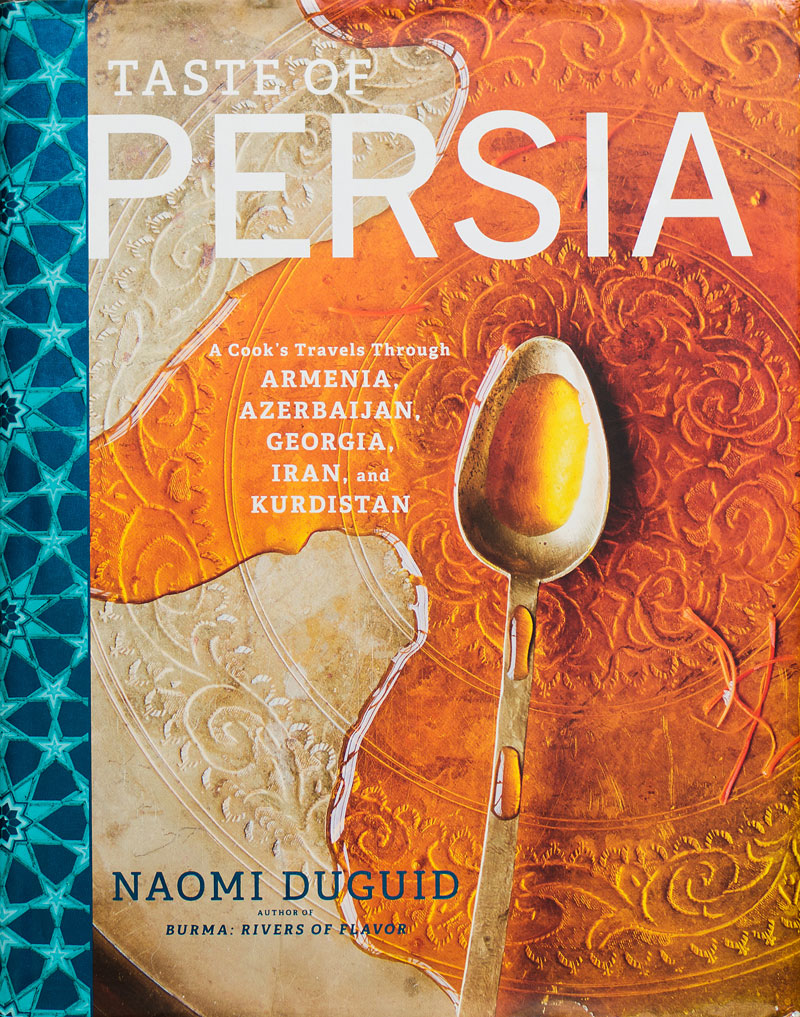
The pages of Naomi Duguid’s latest cookbook, Taste of Persia, overflow with ingredients, flavours and dishes familiar to Indian readers and cooks: dried fenugreek leaves; saffron; coriander and dill; pilafs; kebabs; morabas; sharbats and much more. Unsurprising, when you consider the thirteen centuries of association with Persian food ways through the Zoroastrians –who fled religious persecution and settled on the West Coast of India –and brought with them a culinary heritage that they fused with existing food traditions. Later, the Persian-influenced rule of the Delhi Sultanate brought a rich exchange of ideas, influences, people and a frenzy of planting–supplemented by the later Mughals – of dates, pomegranates, plums, walnuts and melons, by kings homesick for the foods of lands they had left behind. Ingredients and techniques were incorporated into kitchens wherever the Mughals established their courts and, inevitably, filtered down in one form or another into common use. In the late nineteenth century, the Iranians who migrated to India recharged the exchange, bringing us Irani cafés, Irani bakeries and berry pulaos infused with the taste of Persia.
Taste of Persia is replete with dishes that we recognize and that are at the same time pleasingly new to our palates: they are spiced with the lightest hand and frequently livened up with tart berries and dried fruits. Fans of the iconic Berry Pulao at Mumbai’s Britannia, the recipe for which was brought by the proprietor’s wife from Iran, will love Zereshk Polo, made with ruby coloured, sharp tasting Barberries. Pkhali Bademjan, grilled eggplant pâté, has all the smokiness and texture of baingan ka barta, but with the surprise of walnuts, processed and worked into the purée. The generous use of heaps of leafy greens runs through many of the recipes and Sabzi Khordan, the plateful of fresh herbs offered at a meal is an inspired addition to the table, allowing each person to build up the flavours of the herbs they like.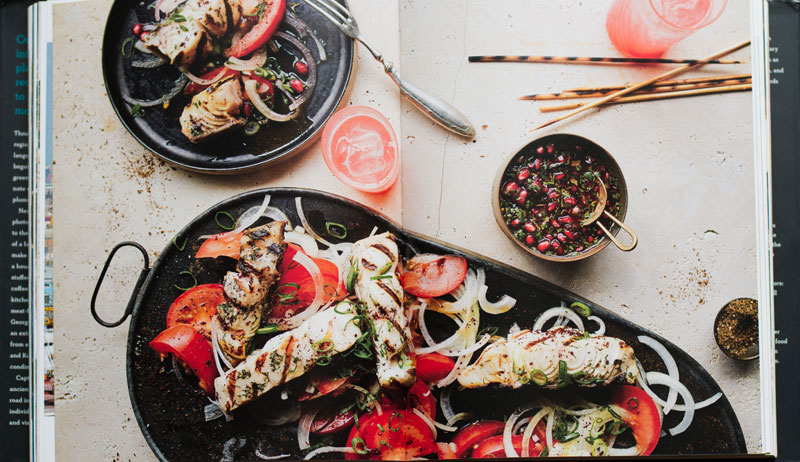
There is a range of soups, kebabs, stews, pilafs and breads, as rich and varied as the landscapes –and the produce they have to offer –that Duguid travels across, all the while interacting and communicating with local people. The most fortuitous, casual encounters with men and women –in marketplaces, mosques, orchards –are worked into brief life stories, often deeply moving in their simplicity, which are interspersed with the recipes, bringing them vividly alive.
I cooked the Persian-Style Fried Fish Filets with the simplest seasoning of powdered, dried fenugreek leaves (kasuri methi), red chili powder, black pepper and turmeric, which gave me delicate, crisp filets. I also made a bowlful of Borani Ye Esfenaj. The drained curd with cooked spinach, topped with fried onions, toasted walnuts and saffron water was light and fresh. Like many dishes in this book, learned from home cooks across five countries, it has survived war and political instability –contemporary politics have not diminished the spirit of generosity and the impulse to share food amongst people. It made me look closer at the tastes and dishes we have known for generations and how they have come to us across cultures, geographical spaces and time. As Duguid puts it, food cannot be contained by geographical or political boundaries: it is the simplest, most direct form of human sharing and communication.
By: Kaveri Ponnapa
This review appeared in UpperCrust Magazine