
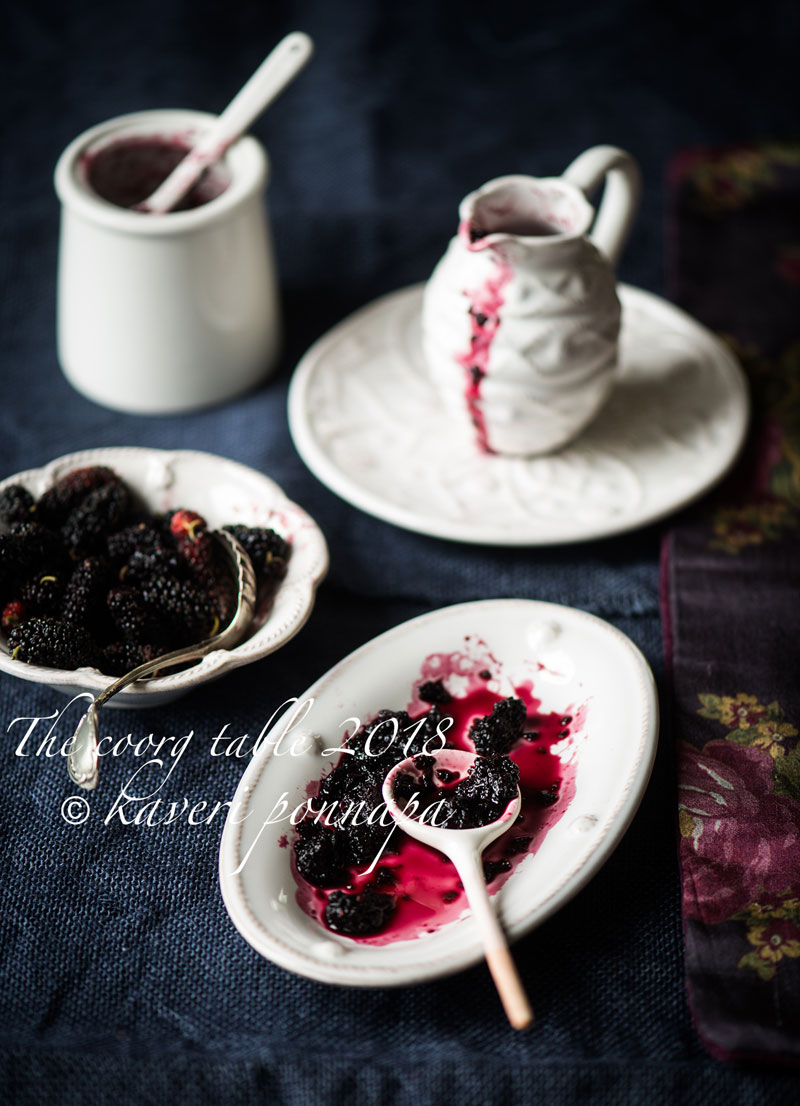
When someone you know, who is eighty years old-or thereabouts -remembers their grandmother making the most perfect mulberry jam, in Madikeri, it’s a good guess that the fruit has been around in the neighbourhood for a long time. Although there are several species of very old mulberries growing wild across Coorg they are not, the local horticultural experts I consulted assure me, native to the land. The deep purple mulberry we are most familiar with in the South of the country is likely to have travelled from West Asia centuries ago and proliferated here, until tracing its tangled ancestry becomes a challenging task. In Persia, where it enjoys almost mythic status, it is known as shahtoot, king of mulberries, a far grander name than the rustic chippli panne, by which it is known in Coorg, on account of its relatively small size.
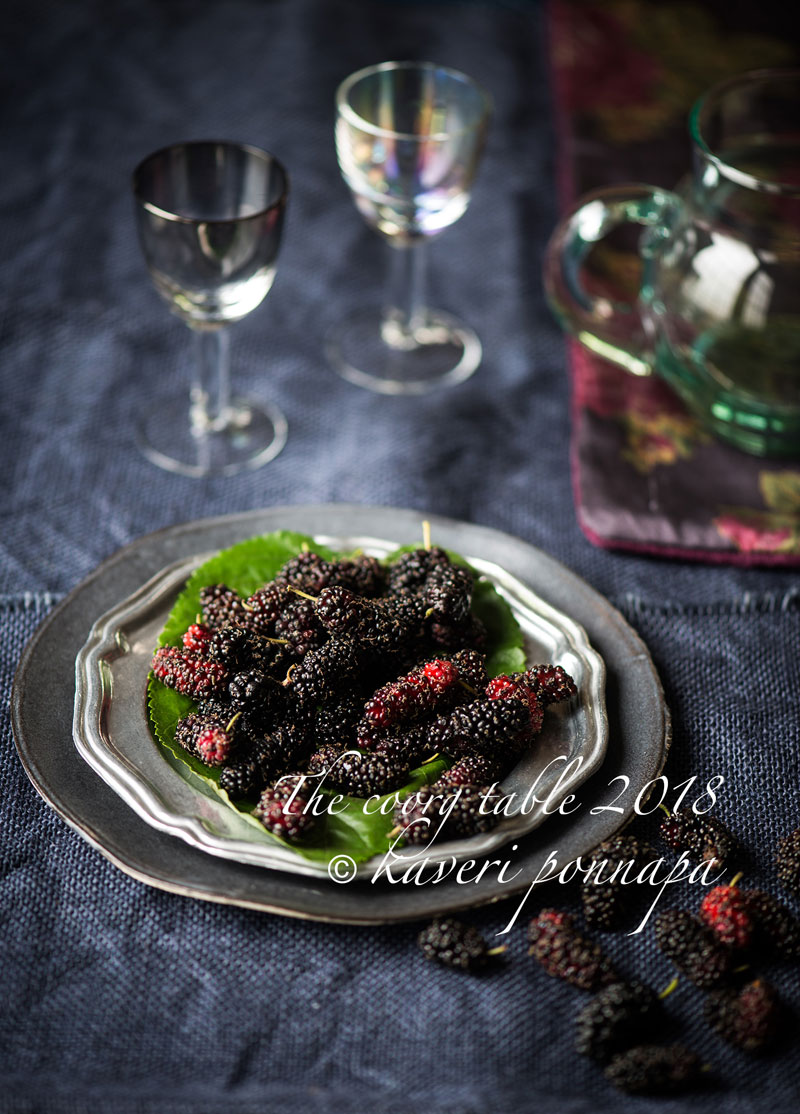
Morus indica, dark purple -almost black -sweet, tart and sticky when ripe, is easily squashed, its intense juice quickly staining your hands and clothes when handled in any quantity. One of the food writers I greatly admire suggested wearing a purple dress while gathering mulberries. For a moment I consider wearing something purple as I set out to make a few bottles of jam, but quickly drop the thought and settle for the usual dark blue apron. Mulberry jam is popular in Coorg, as is a wine made from the fruit. Some families have large trees under which generations of children have gorged on ripe fruit; others have gangly shrubs from which they gather berries. Tree or shrub, everyone seems to have a few mulberry moments that have coloured their memories as deep as the fruit did their hands and skin.
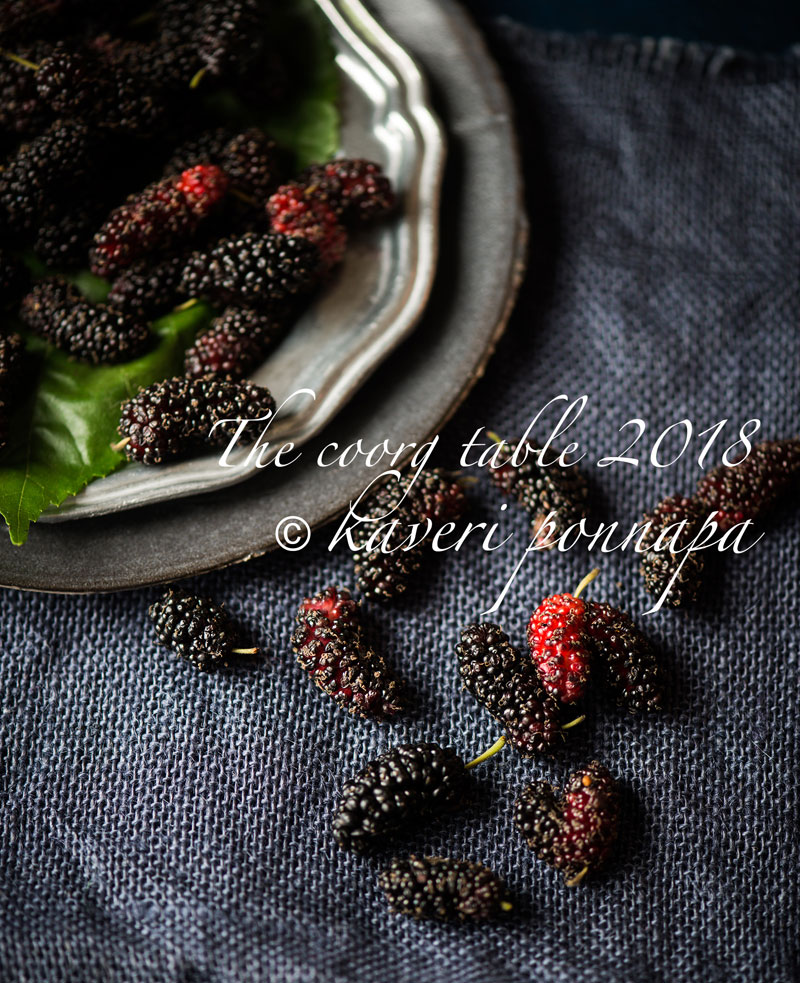
Washing the fruit is probably the most tedious part of the process -the berries bruise and damage easily. You don’t want them getting waterlogged either, so running water over the berries gently to rinse them and then leaving them to drain works best. If you are careful to keep most of the fruit intact while cooking, by stirring just a little bit more carefully than usual, then what you get is an almost black silky mass with swirls of metallic shades of psychedelic purple at the edges that hides generous pieces of fruit.
While the fruit simmers and bubbles in the pan, I try and imagine what those magical valleys in Persia, Central Asia and the Caucasus must look like in the season when heavily laden mulberry trees are shaken to dislodge ripe fruit into waiting bedsheets held out below, and the fruit is extended well beyond summer by drying, preserving and often being made into potent vodka-based drinks. With some thoughtful planting, we might have groves of mulberries in Coorg, where the plant thrives easily.
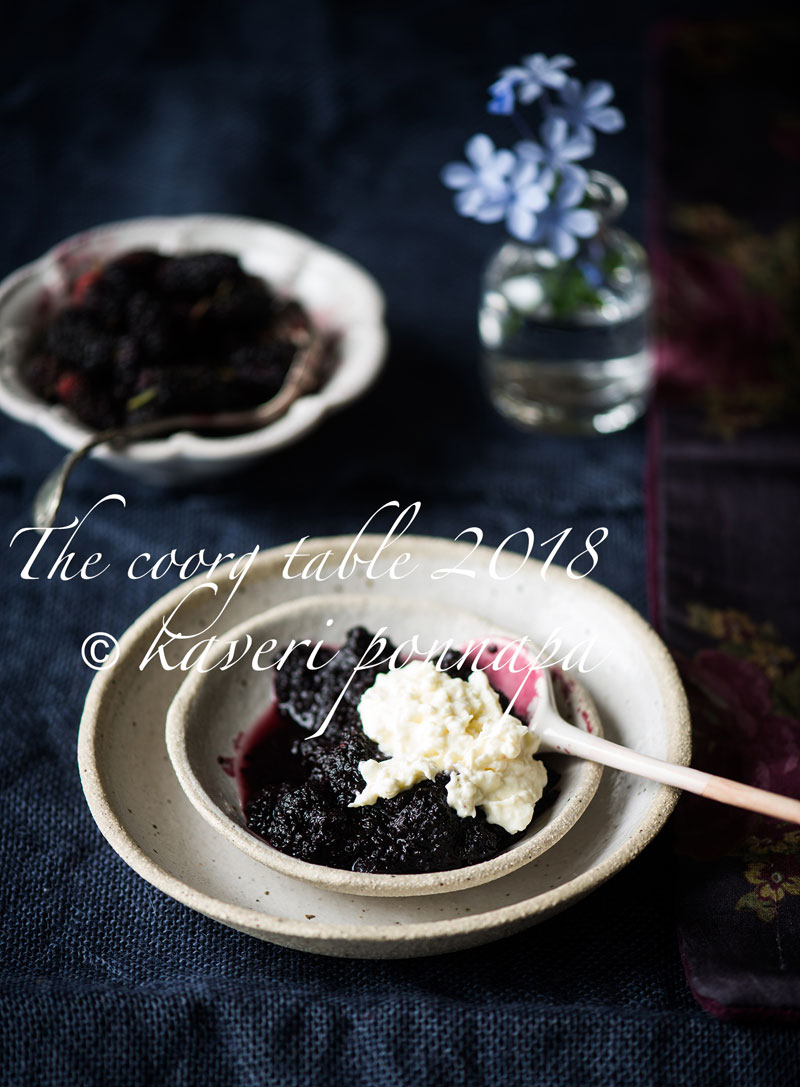
This is a batch of jam I made to test out my recipe that will go into a book. It is simply luscious with akki ottis and freshly made butter; also, dropped over a helping of ice cream; or served with a blob of top-of-the-milk cream. It is rich and heavy, deliberately not too sweet, to allow the essence of the fruit to come through. A spoonful eaten by itself tastes like biting into a heady wine -rich, dark, complex and sweet, balanced by just the right sharpness. When you savour the lingering flavours, it seems like a good idea to confer royal status on the humble chippli pannethat grows in Coorg and give it its due.
All Food Styling: Kaveri Ponnapa
Photo Credits: A.G.P Sathyaprakash
Do look out for the recipes of all the food featured here in my upcoming cookbook.



Beautiful read. I did not know it came from those parts. I can’t wait for the next harvest. Reading this reminds me I need to manure the plants hoping for a good harvest 🙂
Hello Pooja, I am sure your Mulberry plants will respond to your care, and shower you with fruit! The jam is simply divine with akki ottis and a pat of home made butter. I hope you are able to put away many bottles from the next season. Warm wishes. Kaveri
Chippli pannu or mulberry Juice, wine or Jam is very delicious to have. Katta- meeta combination of these fruit makes it more delicious.. Mouth watering images with wonderful writing…Thank you…
Hello Kaverappa, chippli panne fans, all of us, and lucky that it grows so well in Coorg. And mulberry wine, so popular at weddings before more varieties of commercial drinks came around and took its place. I hope you got some good fruit this year, before the rains came. Thank you for writing, and do keep reading. Warm wishes. Kaveri